

While transitioning his children to the West Bend School District after years of homeschooling, John Donaldson had an eye-opening experience that sparked his interest in the school board.
Donaldson has served on the school board for the past three years. His main reasons for running for a second term include ensuring age-appropriate materials are included in school curriculum, improving the budget and making decisions on school programs and budget cuts based on what is most cost effective.
He prides himself on being one of the only members who asks different and unique questions than the rest of the group and also on being able to represent his constituency through the money being spent on the school district.
With one child at Badger Middle School and two children at East High School after being homeschooled pre-COVID, Donaldson noticed areas that his children began to fall behind in when transitioning to public education. By serving on the school board, he hopes to address these learning gaps and improve them through more effective learning styles and teaching techniques.
Donaldson has lived in the school district for the past 25 years. He graduated from East High School before serving four years overseas as a military leader. He has an associate’s degree in IT and currently works as a senior software engineer for an insurance company.
In his free time, Donaldson participates in outdoor activities such as hiking and biking. He enjoys spending time with his family and also rides a motorcycle in the summer.
Donaldson enjoys watching Will Smith movies and reading books written by John Eldredge. He likes to listen to Christian and country music, as well as Frank Sinatra.
Donaldson’s favorite local businesses in West Bend include the Norbert and Mountain Bike Outfitters. His favorite local traditions include going to the Tap Yard on Sundays to play bingo and watching live music at the county fair.
How will your credentials and experiences help you be a constructive member of the school board?
FULL TRANSCRIPT: I think I’m one of the strongest voices on the school board. I bring forth a different perspective from a different background than a lot of the other board members do. I pride myself on asking questions without wavering in stance–I call it like I see it, I don’t back down from ugly questions. If I need to ask a question during a meeting, I don’t hesitate to ask it. If I feel like there’s a conversation taking place that I want to be a part of, I move forward with whatever questions I might have in that also. Just the unwavering stance of making sure that the right things are getting done in the district, and that the students and the families are represented as well. With the board the way it is, we do have a diverse group of people that have different backgrounds, from doctors to lawyers to stay-at-home moms to myself, who has military background. Without that, I don’t think a lot of those conversations take place very well.
A bill passed by the Wisconsin Assembly in February would ban cell phones and other communication devices during instructional time in public schools. What are your thoughts about that proposal?
FULL TRANSCRIPT: It’s funny because I was just researching and doing some work on actually working with the police department to get an ordinance in place to do the same thing. I’ve reached out to another board and they had discussed and let me know how they handled that process. They basically work with the police department, get a city ordinance in place for cell phones, and obviously we would have to write a policy around that to enforce it. They actually have a fine associated with cell phone usage in school, which I think is good–I don’t think it’s a bad thing.
There’s a time and place for cell phones, but we obviously didn’t have cell phones growing up and we finished school just fine. I don’t agree with some of the standards being broken in our schools where teachers do allow or want students to have cell phones because we’re kind of saying, “Hey, this is a rule, but in this instance, it’s okay.” It sets a confusing notion to the students on the side of how cell phones can be used. I’m in favor of the bill being passed and to see how far it gets and if we can move forward with the new policy to support it.
What is another significant challenge the district currently faces? How will you address it?
FULL TRANSCRIPT: Obviously the referendum was passed for a reason. There are a lot of updates needed for the schools. I was the only vote against it, now that it’s in place I’m going to support it, and support what needs to be done with it. The biggest challenge for me in this is ensuring the money is going to useful things and not useless spending. I know that when the referendum was passed to build Badger, there were reports that part of that money went to light displays and stuff like that in the library which were kind of unnecessary things in the school–it’s not stuff that helps the education side of things, it’s not stuff that really benefits the kids in the district or the teachers. Some of that money just didn’t need to be spent where it was.
Also, I want to make sure that we’re being mindful of the amount of money that was passed. I mean, $105 million after interest is close to 150 or 160 depending on interest rates. It’s a lot of money. To waste it on unnecessary things like furniture–that’s part of the things that I was trying to get information on to support the referendum. What furnitures are we going to be potentially keeping, let’s get an audit on those things. How are we going to be moving those over? What’s the cost? Is it cost effective to get new stuff? Those are things that didn’t get answered and it was hard to support it, especially when I talked to members of the Hartford board, and they spent twice as much time for half as much money for research on the referendum that they passed out there in the recent past. That was part of the hard thing for me to get past, is how quickly we moved the process along in this district when it definitely could’ve taken more time. I know it was a time crunch for the ballot issues and stuff like that and to get things on there during a big ballot year with a presidential election.
Those are some of the challenges that I am looking to hopefully be a part of. Making sure we’re mindfully spending that money in the best interest of the community for generations–I mean, you (students) are going to be paying for that bill. You guys only have a couple more years before you guys have property taxes and stuff like that. It’s a significant increase. It was a 37% increase on your property taxes just for the school district alone. That’s a lot of money.
Since the board is non-partisan, how will you approach the topic of political division in the district?
FULL TRANSCRIPT: Political division wasn’t always a factor in society. It used to be a lot quieter, people would get along with whoever–and not saying that I don’t get along with whoever, don’t force your stuff down my throat, and I won’t force mine down yours–we don’t have to fight about anything. When it comes to the district and being non-partisan, there’s an aspect of that that really has to be a shared partisan position and that’s the education value of what the students are getting and the debt ratio we’re incurring on society. Those things, obviously, you can’t really have division on those, you need to be unified with how the stuff is getting spent and how the kids’ education is turning out at the end. Supporting the parents in either aspect, doesn’t matter which side of the political spectrum you’re on, but, making sure that we can be there to be a voice and mediate between the district and the families is the biggest thing. People might say I have political opinions or something like that, but it’s really not, it’s more of a, “this is how I see the position.” It doesn’t have anything to do with this, it’s just, these are the values that I want to see our community move forward with, and it’s the top priority.
The core education–reading, writing and arithmetic–that’s always been set. Those need to be the things we focus on. We need to focus on getting those scores up. We have 40-60% proficiency across those core classes, which means we’re failing 40-60% of the students. That’s not a standard that I want to live with. I mean, I’d love to see it get up to 80% proficiency across every grade. Obviously COVID took a hit with some of those standards, and some of those proficiencies for the students and the district. You saw a decline in a lot of that after that took effect. I don’t think that our current administration and groups are doing a terrible job with getting better things in place, and we’ve seen some of those numbers improve in the last couple years, which have been good. It’s just not there yet. I think there’s definitely more work to do. But, at the same time, I understand–at the last report for education, I didn’t have a whole lot of questions–I could see there was improvement, and when you implement a new system for some of these younger grades and stuff, it’s going to take a few years to get implemented and to really see the effects of it. It’s kind of a waiting game, but it’s hard to wait, because you want to see the improvement right away.
How do you plan to measure and evaluate the success of your tenure on the board?
FULL TRANSCRIPT: I’ll just go back to being a good steward of the taxpayer’s dollars: What’s the educational value that our students are getting by the time they graduate? It’s a short answer, but there’s not much more that you can really base it off of besides those things. A lot of that stuff doesn’t matter. I don’t care about the teachers’ salaries–and someone’s going to take that wrong, but that’s not what I mean, and I hope they understand that–but, I don’t care about all that, it’s what are you doing that makes you earn that salary, to make sure that our students are getting the best education possible?
Please say one nice thing about each of your opponents.
FULL TRANSCRIPT: Melanie is soft-hearted, she’s a good person, she’s always been there to bounce questions off. Obviously the first time I ran with her, we ran together. Not saying that we’re running or not running together, but we do have similar values and I can appreciate that.
I don’t know much about Joe, but I can see he does a lot for the community. That’s a good step forward. The more engaged we can be in the community, the more we are part of it. You can’t say you want to do something for the community (without sacrifice). It’s essentially a self-sacrifice you’re making away from your family, away from your own personal hobbies and stuff like that; it’s a lot of time to be on the board. For someone else to want to throw their hat in the ring, it’s always a point of encouragement to see other community members who are willing to do it. No matter who gets on, I hope for the best for the district. We can continue to grow the community and grow the educational value our students are actually getting.
Read about the school board candidates at The Current. The school board election is April 1.
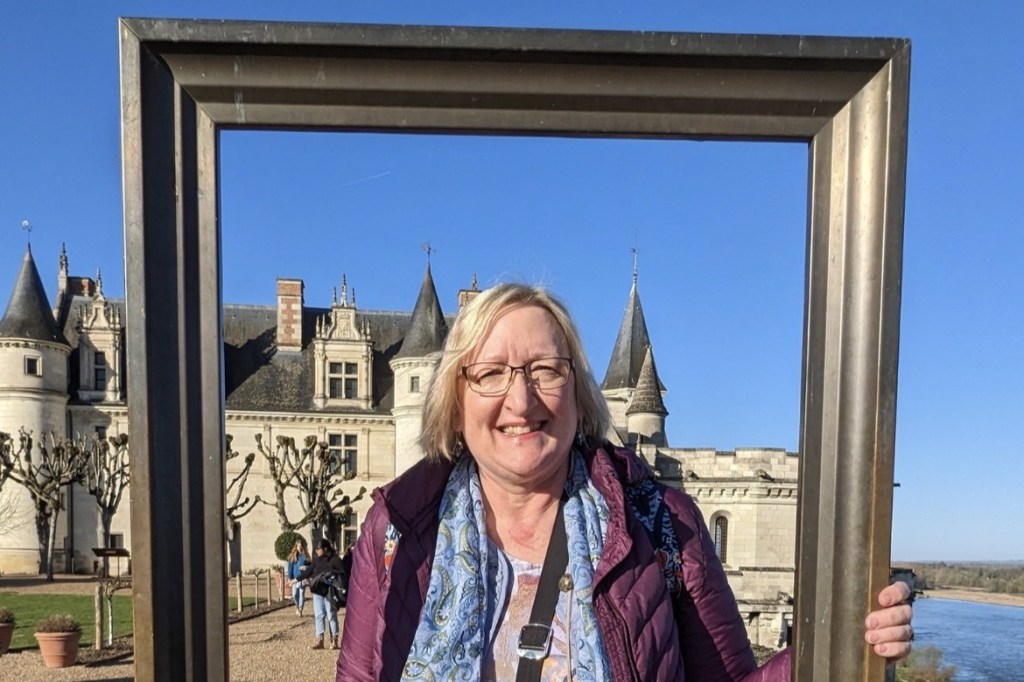
(Photo courtesy of John Donaldson.)


 The West Bend Current
Leave a comment