VIEWPOINT
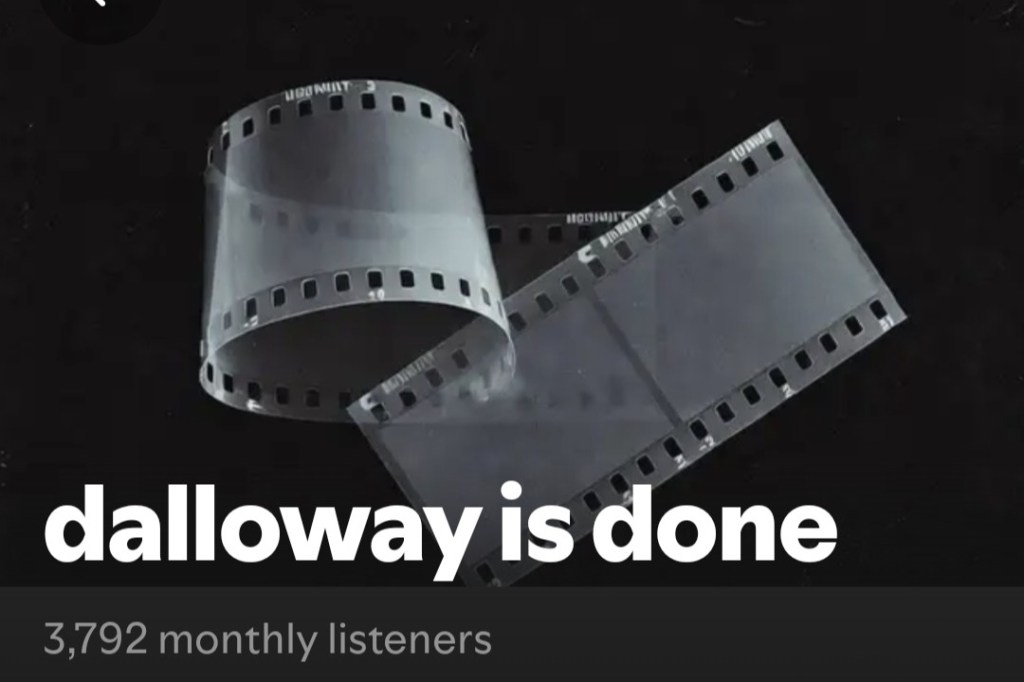
A few weeks ago, I was on TikTok when I stumbled upon a video that piqued my curiosity. It was an edit made by an artist called Dalloway Is Done for their song “Wasteland.” Intrigued by the musical snippet, I added it to my queue to listen to later. When I returned to “Wasteland,” I adored it. It was an amazing post-punk song with a soaring chorus and powerful vocals. I immediately began to listen to every single song released by Dalloway Is Done. By the time I worked my way through their discography, I knew I found my new favorite band. Sounds perfect, right?
It also helped my obsession that Dalloway Is Done is a tiny, obscure artist. I was the first stream on about a third of their songs. Like everyone else on the Internet, I have a fixation on being niche. I constantly scour social media for new, small bands to listen to. There’s something magical about encountering a raw piece of music which has been untouched and overlooked by everyone else. When I first listened to Dalloway Is Done, I felt that magic. I wanted to scream from the rooftops about this amazing new band I discovered and their phenomenal artistry. I told all of my friends to listen to “Wasteland.” Their lyrics were a perfect storm of references to vintage cinema, classic authors, and indie rock. I was hooked.
There was only one problem with them.
The person behind Dalloway Is Done posted a video about a week ago stating their goals for their career. They outlined their ambitions for Dalloway Is Done to become a musical focused on queer love and indie sleaze music, a recent trend recalling the post-punk revival and electropop of the 2000s. But then they also revealed that their music was created by AI.
I was devastated. Seeing that ruined my day. I felt duped, lied to, betrayed. How could I have been so stupid and gullible as to fall for fake music? I had begun to suspect their AI usage after realizing that they put out three albums in two months, but I figured maybe they just had an extensive back catalog. But they didn’t. I became the very thing I railed against: a blind, uneducated consumer mindlessly listening to the artificial product of a computer. I thought I knew better. But I didn’t.
Dalloway is Done opened my eyes to how omnipresent AI is in our society. It has permeated every aspect of art and media. From the controversy surrounding Adrien Brody’s AI-assisted accent in his Oscar-winning performance in “The Brutalist” to every third TikTok I see to the songs I unknowingly sang along to in my car, there is no corner of the Internet that has been unscathed by artificial intelligence.
I’m opposed to AI for a variety of reasons. Obviously, it kills the planet, sucking up tons and tons of gallons of clean drinking water. It’s driving up the costs of electricity for homes, it’s the reason why your RAM is thousands of dollars. AI is also draining art of its humanity. I’m not saying anything new here, but art is possibly the most human trait we have. The ability to create works that spark emotional responses is what defines us as a species. Now all of that personality and emotion is being sapped away by ChatGPT. Kids my age can’t write on their own. We’re regressing as a society and for what? Generative AI isn’t helping anyone, quite the opposite. It has virtually no positive effects on humankind. It steals jobs and resources from the very people it’s supposed to help.
To become an active consumer of robotic slop made me feel ashamed. I was embarrassed that I fell for this inhuman music. I thought I knew enough about AI to identify it. I can tell AI images and videos apart from their real counterparts. I’ve spent enough time on the Internet to watch AI grow into what it is today. But it felt and sounded so real. And that’s what terrifies me. Dalloway Is Done sounded like it was made by real humans. To their credit, none of their lyrics were AI, just the instrumentals. They’re a published poet and have been adapting their poems into song form. They also expressed that their usage of AI is merely a stepping stone to get their songs out there. Their main goal is to have Dalloway Is Done be a fully human project. But until that day comes, I’m left with lines of code bubbling through my ears and a sense of guilt tugging down my chest. And that’s the really scary part. It’s horrifying to know that I can’t tell real and fake apart anymore, even in my greatest passion, music.
I felt duped, lied to, betrayed. How could I have been so stupid and gullible as to fall for fake music?
Noah Becker, Current Staff
As an aspiring musician, Dalloway Is Done made me feel profoundly hopeful. To see an artist with no budget and no audience succeed at making great pop songs with production that sounded genuinely professional was nothing short of inspiring. I felt like I, too, could master GarageBand or Ableton and produce the songs I wanted to make. That’s why I was so crushed to find out that Dalloway Is Done was a falsehood. Instead of taking time and care to exercise our human right to creativity, they took the easy way out. And that leaves me to wonder about the future of art.
Will we all take the easy way out? While there’s a massive backlash to generative AI, there’s still more people who use it. My parents’ generation has taken to it rapidly, with even our school’s principals printing out artificial pictures of themselves and taping them to their doors. Our school musical used AI to generate portraits of the queens of England. The average consumer (excuse my pretensions) doesn’t seem to care where their music comes from, just that it sounds good. Since music has been increasingly commodified and turned into a product in the streaming era, AI had a wide window to swoop in and grab success and attention from other, actually human musicians. AI artists have begun to chart on the Billboard Hot 100, such as Xavia Monet and Breaking Rust, who topped the R&B and Country charts, respectively. Apps like Suno and Udio make songs with a mere click.
This isn’t art. Great, meaningful music comes from the soul and takes days, months, years even to take shape. It has imperfections and flaws, a wrong note, a squeal of feedback, but it is true and honest. That’s what music should be. That’s what connects my generation so intensely to songs from decades ago. It’s the story behind songs, the messy and beautiful nature of songs. It’s not a gaping void of personality filled by bland, artificial noises. AI music is not music. It’s a product. And it has emerged from the exploitative music industry, which finally doesn’t need to pay artists anymore. Now they have cheap, shiny songs to enthrall the masses. The bread has been here for years, now the circus is free. There is no longer a career in the arts unless you’re very, very lucky and even-more well-connected. Now a computer program is filling in the rest of the shrinking industry. I’ve lost hope in my most significant passion.
It’s so simple to not care about art. It’s so easy not to care about anything these days. I feel so disconnected from the world around me. And I know it wasn’t always like this. Sometime in the murk of my childhood, I was free. We all were. But now, here we are, trudging through the swirl of fake news and foreign politics and culture wars, just trying to make it to a brighter future. Why do I hate myself for trying to find a source of artificial pleasure during one of the most corrupt and divided times in history? Am I helping AI replace all of us? Are we all mere lemmings in some greater scheme for the government to control our minds, like some people I’ve seen online believe? Is there a way to unite and remove AI from our society?
We see so much discourse these days. Every miniscule issue is blown up to massive proportions and shoved in our faces. Nobody can agree on anything and everyone has an opinion to share. Is it my place to add to the swarm of arguments and ill-thought beliefs to be thrusted into your eyes?
Who knows anything anymore? Not me. I’m giving up and going to listen to Arcade Fire or some other all-human band with flaws and emotions.


 The West Bend Current
Leave a comment