

Three villains, two wingsuits, one shield and zero themes.
Last Friday “Captain America: Brave New World” opened as the worldwide box office leader, bringing Sam Wilson, played by Marvel mainstay Anthony Mackie, into the boots of the titular hero. It was largely panned, joining the ever-increasing list of the Marvel Cinematic Universe’s critical flops. The film is emblematic of one major problem which the MCU may continue to face in 2025: a thematic drought.
It is sometimes easy to forget the importance of theme in a work of art, especially one tailored to harmlessly appeal to the masses. Many will say that they do not need deep, bold choices in a superhero blockbuster, yet this is incorrect, especially for a hero who sports the Stars and Stripes on his suit. For example, each of the previous “Captain America” films managed to be entertaining while exploring political topics relevant to historic and modern America.
“The First Avenger” analyzes the mythos of soldiers in wartime America. In that film the protagonist Steve Rodgers must choose between being a public relations agent or an actual soldier who risks his life for the values of his country. “The Winter Soldier” explores how far a government should be able to reach to ensure safety, a debate very relevant to more recent U.S. topics such as the establishment of the PATRIOT act. The third film, “Civil War,” ventures into more fictional politics, exploring the logistics of superhero oversight. While this conflict may not be directly seen in real America, it still connects to the nature of U.S. imperialism.
“Brave New World” may appear to also explore political and social themes, with one of the villains being an out-of-control president, but the film never actually says anything. The aforementioned president Thaddeus Ross, played by the American icon Harrison Ford, is depicted as a regretful old man who wants to move on from his mistakes. Despite the film climaxing with him swelling into a fiery red monster, he elsewhere never displays any tendency to act out. Imagery of him throwing his podium aside and using the American flag as a spear directly contradicts what we see of the character outside of this scene. Ross has no bottled-up malice, he just has an uncontrollable outburst. His character does not represent anything, political or otherwise. This might have been fine if he was purely a tool for another villain, one absent from the film’s marketing, but he was not.
The other villain, who will remain unnamed to avoid spoilers, is equally hollow. The film sets them up by hinting at a political motivation and establishing their means as the use of misinformation. The inciting incident of the plot especially hints at this, though the film does not keep its own process. This villain’s motivations are entirely personal, amounting to a paint-by-numbers revenge storyline which is barely explored. The final antagonist is Sidewinder: a side villain who is largely inconsequential to the plot with unexplored motivations and goals, all played by a type-cast Giancarlo Esposito. The character feels as though he was directed to be a shallow mimicry of his many other, similar performances.
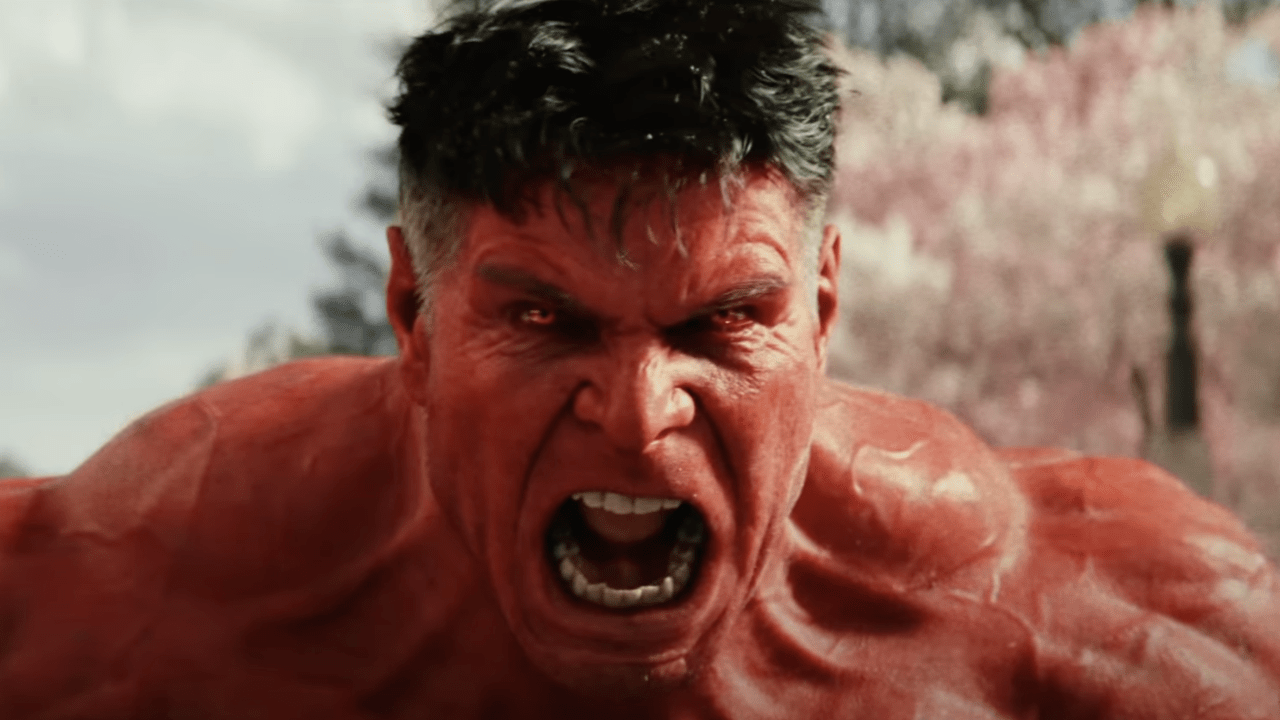
Modern America is in a polarized, gridlocked state with social media refusing to put out the flames. Radicalism and misinformation could be a very interesting topic for a political thriller, and if well personified, could make for a despicable villain. Instead, “Captain America: Brave New World” dodges any meaningful commentary with its villains. The heroes pay lip service to interesting subject matter such as systematic discrimination, but each problem of such nature is sanitized, ending on an unrealistically happy note. It is not a case of mere fictional necessity, but rather a gross dismissal of discriminatory infrastructure’s lasting consequence. Structural violence is yet another fascinating struggle for a hero who represents the establishment itself to puzzle through, so why does the hero barely try to resist it?
The preceding Steve Rogers films allowed him to break the government’s rules when he considered them to be wrong. In each movie there was one or even multiple scenes wherein he would directly disobey orders which tried to overwrite his moral compass. In his film, Sam Wilson bends over backwards to play by the rules. He will not break someone out who was wrongly incarcerated or forcefully resist a U.S. naval fleet about to start a war over resources which are not theirs. He merely sneaks around with a few of his coworkers for mostly harmless investigations. He barely even acts until he has the permission of the president’s administration.
The film also never explores Sam’s philosophy. What about America does he love so much that he will wear its flag and risk his life for it? What lines does he draw regarding when the government goes too far? The plot never puts him into challenging circumstances that allow the audiences to learn such things. The good and bad guys are always immediately clear, so why be invested in the scenes of action?
Because nearly every facet of this film lacks thematic depth, it becomes difficult to invest in the film. When analyzing the MCU’s onslaught of 2025 works, it becomes clear that should this problem persist, future projects will ring equally hollow.
Set for a May release, “Thunderbolts*” proclaims to depict a rag-tag group of morally-dubious villains and anti-heroes, but without thematic depth, how can the film serviceably write characters who fit anything but a black and white moral compass? July’s “Fantastic Four: First Steps” has been advertised as a heartfelt story set against a stylish ‘50s backdrop. Will the aesthetic serve the story by exploring the relevant themes in storytelling from that era, or will it just be a shiny coat of paint on another safe script that lacks substance? Perhaps most concerning, “Daredevil: Born Again,” scheduled for March, promises to follow up what could arguably be the MCU’s most thematically complex work: the 2015 “Daredevil” TV series which explored the religious, social, legal and moral implications of being a vigilante in a gritty, unfeeling city. If these themes are absent, the show will be a surefire disappointment.
The MCU needs interesting themes now more than ever. They have access to a treasure trove of heroic and evil characters which each serve as the figure of a different mythos, so they had best not repeat “Brave New World’s” critical mistake of making these figures stand for nothing.
(Images are official publicity material.)

 The West Bend Current
Leave a comment