Eight years ago the last living male northern white rhinoceros died in captivity. But what if they could be resurrected? As the great Dr. Ian Malcolm once said, “Life, uh, finds a way.”
In February scientists were able to create a pure northern white rhino embryo at the Ol Pejeta Conservancy in Kenya. This brings the total number of embryos to 39, the northern white rhinos’ last hope. As there are only two northern white rhinos in existence (both being female), any chance of bringing the species back to the wild must be found by artificial means, namely artificial insemination and fertilization. However, IVF brings with it its own challenges.
Those challenges, though, are exciting for West Bend science teachers and students.
“By starting with only a few rhinos, the subsequent population will have a hard time resisting disease and having proper adaptations to survive in the wild,” said AP Environmental Sciences teacher Lucy Delain.
A diverse gene pool is often essential for the long-term success of the species, which raises concerns about whether scientists will truly be able to bring these majestic giants back.
Earth has millions of species, however, so why should the extinction of one foreign species affect those here?
“It’s a domino effect,” said London Robertson, a West senior who also serves as president of SEED, the WBHS environmental club.
There are five species of rhinos, and if one goes extinct, it puts the others at risk. As a keystone species, many animals in their habitat rely on them for food, and some species of insects and birds use them for protection and a place to rest. Picture ripples on a lake: one stone can change everything.
Similarly, the extinction of one species “signifies the state of our world,” Robertson said.
The fact that even just one species, especially one so recognizable, could go extinct should be a wake-up call for those here. Delain says change starts with being educated.
“It’s difficult to care about an issue if you aren’t aware of what it is,” she said.
Students and community members can get involved and help solve these problems by donating to animal preservations like the Jane Goodall Foundation, joining organizations like SEED or Roots and Branches and speaking up about climate change. Being sustainable and working on your own carbon footprint is also incredibly important.
“The first step you can take is improving yourself,” Robertson said.
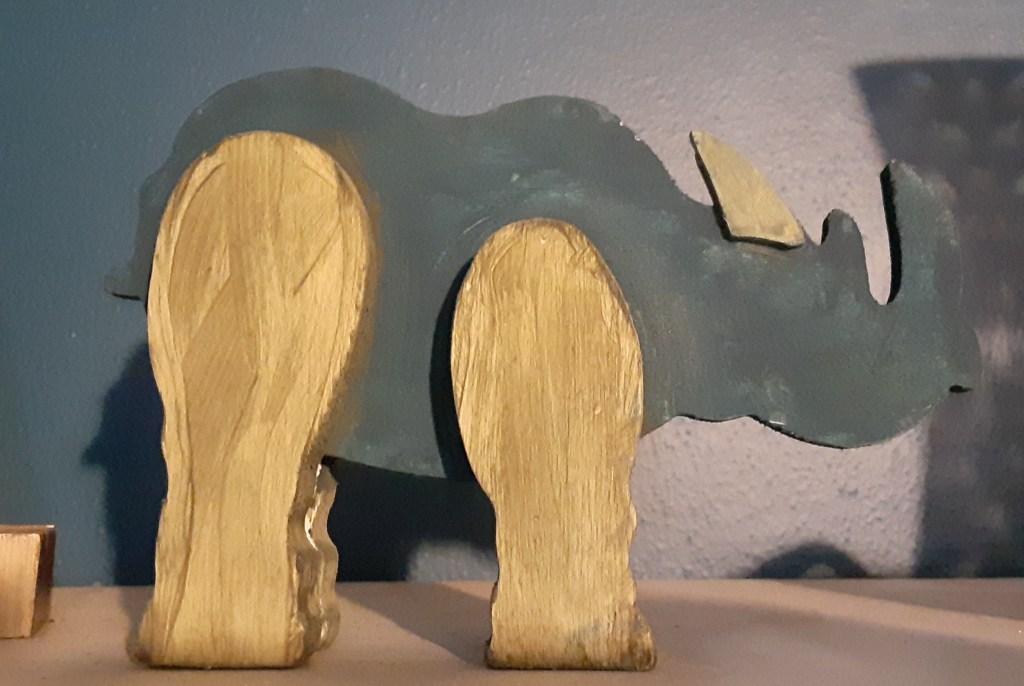
Top image: A rhinoceros carving painted three years ago by Ariel Hermann. Photo courtesy of Hermann.



Leave a Reply