
VIEWPOINT
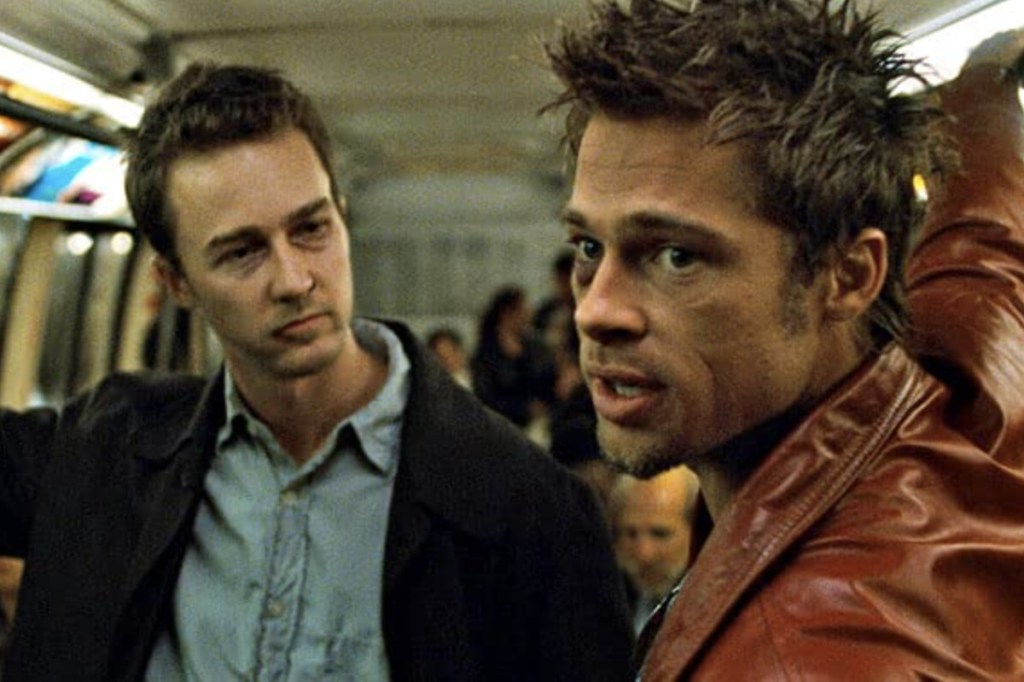
I recently had the pleasure of theatrically viewing the 4K remaster of David Fincher’s 1999 classic “Fight Club,” a film that has long resided on my list of films that came out before I was born but want to see on the big screen.
“Fight Club” has always been a thought-provoking film, but now more than ever its message is dire and necessary. “Fight Club,” at its roots, is about people who allow their sense of self to be hijacked.
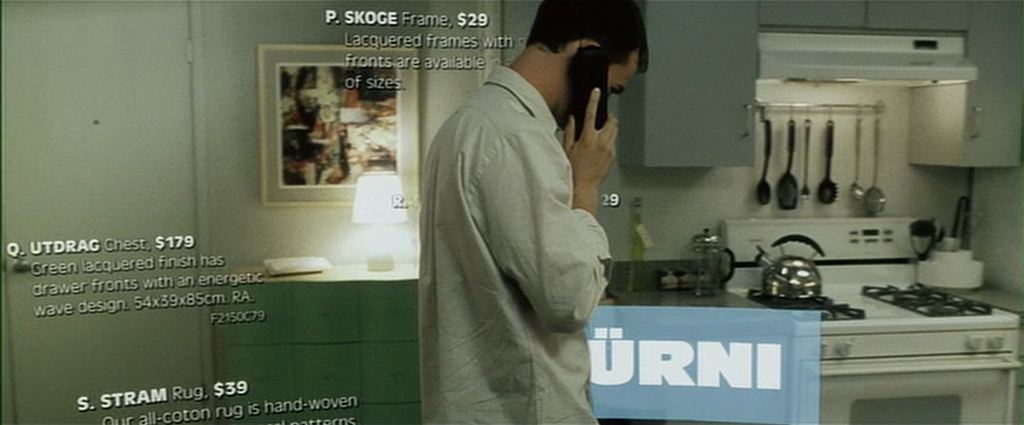
After the apartment of the Narrator (Edward Norton) explodes, the pitiful nature of his life becomes emphasized in that he has no one to call, save for the mysterious and enigmatic Tyler Durden (Brad Pitt), a soap salesman he met on a flight earlier. The Narrator tells Durden of his plight: his whole life was in his Ikea-catalog apartment, the blue glass bowls with little air bubbles and the recycled paper hanging lampshades. Durden is obviously irritated by the Narrator’s dependency on these frivolous things. “The things you own end up owning you,” he says.
This statement was spectacularly poignant when the film first released, as the world, or more specifically the Western world, fell down the slippery consumerist slope. Examining modern life might yield different results, but this statement still applies today, in many different ways to many different concepts.
Durden’s statement is, at its core, about the loss of individuality, prescribing to the executive marketing ideal and following the paths laid out for us. When the film was first released, I believe this statement targeted largely the main, popular fashion and home goods magazines ( I say this because that is the method of consumerism highlighted in the film). These days, few go out of their way to purchase a magazine. Consumption of fashion trends is curated by social media algorithms instead, through select influencers, partnerships, sponsorships, or even just buying advertisement space on social media websites. This is not even to mention that companies harvest and utilize users’ data to target them with specific ads to farm engagement.
The darker thing still is that these companies, through their social media platforms, can isolate and maximize engagement from every individual user. If they notice, for example, that Todd watches videos about the hottest menswear for an average of 10 seconds longer than other types, they will then feed him more and more menswear videos because that guarantees more engagement and more ads being shown to him. Todd is given a value in time.
These forced echo chambers also exist in the opposite way, too. Carl really hates menswear videos, but clearly has a passion for nature content as indicated by his tendency to read comments on those types of videos. Then, Carl will get more nature videos and fewer menswear videos.
Although he and Todd like separate things, they are both victims, and to the company they are both just machines. Business capital, nothing more.
We think that these feeds are our own, and to a degree they are, but fundamentally they are not. While our feeds are “personalized,” they are not really our “person.” What I mean by that is that I do not get to choose the next video that comes up when I swipe, or the next recommendation, and that is, to me, terrible.
Although it is easy to romanticize the past, there is an amount of truth in the ways we used to consume, or more importantly curate. My favorite example of the best form of curation today? Choosing what book to read, what DVD to play or even what CD to listen to next. It’s my choice to make, not that of a bunch of code and data made for me.
This brings me to another concept that I can apply Durden’s statement to: Artificial intelligence. I am deeply concerned that because people so easily offload their independent curation, AI will only exacerbate the negative effects that social media has on people. On nearly every long-form video I see there is usually some sort of “AI Summary” attached to it. Simple web searches now have meager and often incorrect information generated by AI.
My fear is that critical thinking and eventually base cognition will begin to crumble, the same way individual curation and the self-confidence it creates has become so rare.
I believe that AI should simply be a tool, but quickly I am afraid that it will become a cognitive necessity for many. I can attest to this statement due to the massive amount of classmates that I know firsthand who abuse these tools to their own immediate benefit but unseen, long-term detriment.
As I watch AI begin to take over the creative minds of my peers, I have to wonder, “What next?” What will happen now? I think that “Fight Club,” through a modern lens, encourages refusal of algorithms and AI in particular. While most of the film is about masculinity, the concept of becoming one’s own man for himself is applicable here too.
“Fight Club” criticizes taking things as givens, and instead instructs the viewer to find the things they have latched onto. Things like what society thinks a man or woman should be, what kind of job they should have, or what kind of family and life they should lead. Identify these things, and analyze them. Ask “Why?” more of things that are often taken as givens.
Why do I depend on social media to find new music/new clothes/new books?
Why do I need to use AI to do this task?
I think that if this approach is taken, in the long run people will stop taking things for granted as much. I think that people will, in particular, stop taking themselves for granted so much. Every single person is capable of so much, so why are we allowing ourselves to be handed over to systems that cut us short of greatness?
The “Fight Club” 4K Ultra HD Blu-ray was released by 20th Century Studios on May 12.
Images are official publicity material.






Leave a Reply